Saline Nasal Spray for Kids: Benefits, How to Use and Getting Toddlers to Cooperate
Stuffy nose. Can’t sleep. Can’t breathe. Wakes up miserable. Every parent knows how frustrating childhood colds can be.
Most reach for humidifiers or cough syrup first. But one of the simplest, most effective tools is often overlooked: saline nasal spray for kids.
Saline spray is inexpensive, safe for daily use, and research suggests nasal rinsing can reduce cold duration, improve breathing, and help clear mucus more quickly.
Yet many families never use it… or they try once and give up because their toddler refuses.
Let’s talk about why saline nasal spray works, when to use it, and how to actually get kids to cooperate, plus the products I recommend in my own home.
Affiliate Disclaimer: Some of the links in this article are affiliate links, which means we may earn a commission if you make a purchase through those links at no additional cost to you. We only recommend products that we believe in and have personally used or thoroughly researched. Your support helps us continue to provide valuable content.
- Why Nasal Spray Is So Powerful (and Why Most Parents Don’t Use It)
- Best Congestion Remedies for Kids: What Works and What Doesn’t
- The Science: How Saline Spray Actually Works
- 5 Benefits of Nasal Rinse for Kids
- When to Use Nasal Spray: Daily Prevention vs Illness Support
- How to Use Nasal Spray on Toddlers and Young Kids
Why Nasal Spray Is So Powerful (and Why Most Parents Don't Use It)
Most respiratory illnesses start in the nose and upper airway.
When viruses enter the nasal passages they trigger inflammation, increased mucus production, and swelling of the nasal lining. This congestion can lead to:
- Poor sleep
- Mouth breathing
- Sinus pressure
- Post-nasal drip cough
- Increased ear infection risk
Saline nasal spray for kids works by physically flushing out mucus, viruses, allergens, and irritants from the nasal passages.
Instead of suppressing symptoms, it helps remove the source of irritation.

Clinical research has found that saline nasal irrigation can shorten the duration of upper respiratory infections and reduce symptom severity in children.
Parents often notice improvements like:
- easier breathing
- better sleep
- faster recovery
So why isn’t every parent using it?
Because every parent knows toddler cooperation for this sort of thing can be a long shot.
Many parents tell me:
“There is absolutely no way my toddler will let me spray something in their nose.”
I understand completely. The first few attempts can feel impossible.
But with the right techniques, most kids learn to tolerate nasal spray surprisingly quickly, and many families end up using it every cold and flu season because it packs a powerful, supportive punch when compared to other common cold and congestion supports.
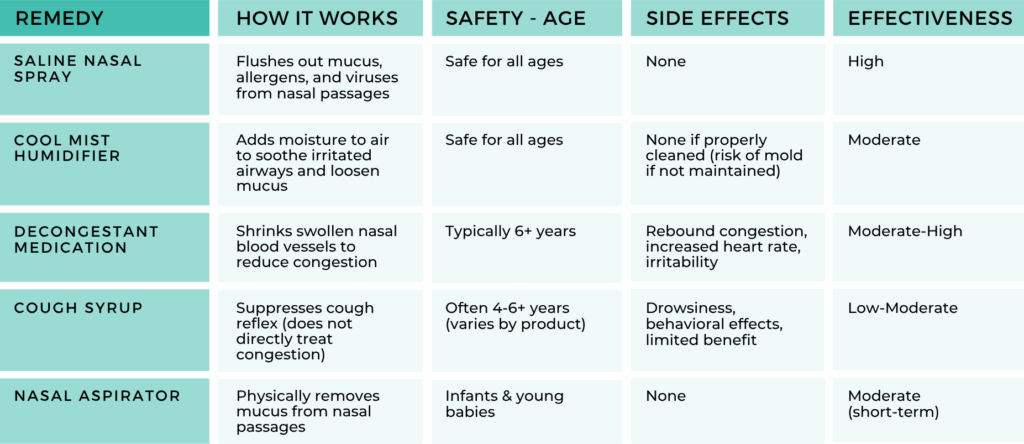
Best Congestion Remedies for Kids: What Works and What Doesn’t
The Science: How Saline Spray Actually Works
Saline nasal sprays contain sterile saltwater designed to mimic the body’s natural fluid balance.
When sprayed into the nasal passages, saline works in several ways.
Thins mucus
- Saltwater helps loosen thick mucus so it drains more easily from the nasal passages.
Flushes out pathogens
- Viruses, bacteria, pollen, and environmental irritants can be physically washed away before they continue irritating the nasal lining.
Supports natural nasal cleaning mechanisms
- Tiny hair-like structures in the nose called cilia help move mucus out of the airways. Saline irrigation improves this natural clearing process.
Reduces inflammation
- Hydrating irritated nasal tissue can help calm swelling and improve airflow.
- Because saline works mechanically rather than chemically, saline nasal spray for kids can be used frequently without medication side effects.

5 Benefits of Nasal Rinse for Kids
SHORTENS COLD DURATION
One of the biggest benefits parents notice is faster recovery from colds.
Studies show that children using saline nasal irrigation during respiratory infections may experience shorter symptom duration and reduced nasal congestion.
Many families report colds improving two to three days sooner when saline rinses are used consistently.
MAY HELP PREVENT EAR INFECTIONS
The nose, throat, and ears are connected through the Eustachian tubes.
When congestion blocks these tubes, fluid can accumulate in the middle ear.
Clearing nasal passages with saline helps support healthy drainage and pressure balance, which may reduce the risk of ear infections.
SUPPORTS HEALTHY NASAL BREATHING
Congestion encourages mouth breathing, especially during sleep.
Nasal breathing is important for:
- proper jaw development
- air filtration and humidification
- healthy sleep patterns
Using saline spray helps keep the nasal passages clear so children can breathe through their nose naturally.
REMOVES ALLERGENS & IRRITANTS
Pollen, dust, chlorine, pet dander, and pollution can irritate the nasal lining.
A quick rinse with saline nasal spray helps remove these particles before they trigger inflammation, making it helpful during allergy season.
MAY HELP PREVENT ILLNESS
Many parents only reach for saline spray once their child is already sick.
But nasal rinsing can also be used as a preventative strategy.
Children who attend daycare, school, or crowded activities are constantly exposed to germs.
A nightly nasal rinse may help reduce viral load in the nasal passages, making it harder for infections to take hold.
This is one reason some families use saline spray daily during cold and flu season.
When to Use Nasal Spray: Daily Prevention vs Illness Support
Saline nasal spray for kids can be used both preventatively AND during illness.
DAILY PREVENTION
Many parents use saline spray once per day to:
- rinse away allergens
- remove germs from school exposure
- support clear nasal breathing overnight
Bedtime is often the easiest time to build this habit.
ILLNESS SUPPORT
When your child is congested or fighting a cold, saline spray can be used more frequently.
Typical use during illness:
- 2–4 times per day
- before naps or bedtime
- before using a nasal aspirator in babies
Clearing mucus regularly helps prevent thick buildup that worsens congestion.
How to Use Nasal Spray on Toddlers and Young Kids
Technique matters more than most parents realize.
Here is the method I recommend for using saline nasal spray for kids.
- Position your child upright: Have them sit on your lap or stand comfortably with their head slightly tilted forward.
- Aim slightly outward: Point the nozzle toward the ear rather than straight up the nose. This follows the natural shape of the nasal passage.
- Use a gentle mist: One or two sprays per nostril is usually enough.
- Allow drainage: Let the saline and mucus drain naturally. Younger children may need help blowing their nose afterward.
- Repeat as needed: During illness this can be repeated several times per day.
Getting Kids to Cooperate: Real Tips That Work
Let’s talk about the real challenge: how to get a toddler to use nasal spray without a meltdown.
First, know that resistance is completely normal.
These strategies make a huge difference.
MAKE IT A PART OF A ROUTINE
Children resist unfamiliar things. If nasal spray becomes part of a regular bedtime routine, it quickly feels normal.
LET THEM TRY IT FIRST
Toddlers love control. Let them spray mom, dad, or a stuffed animal before trying it themselves.
TURN IT INTO A GAME
After spraying, ask your child to “blow the dragon” or make funny nose sounds.
Play reduces anxiety.
STAY CALM & CONFIDENT
Children mirror parental energy. Approach the process casually and matter-of-factly.
INTRODUCE IT WHEN THEY’RE HEALTHY
One of my biggest tips is to practice nasal spray before illness hits.
When kids already feel miserable, they’re far less likely to cooperate with something new.
Want to go even deeper on cooperation? My conversation with Devon Kuntzman, author of Transforming Toddlerhood, is full of practical scripts and strategies for exactly these moments.
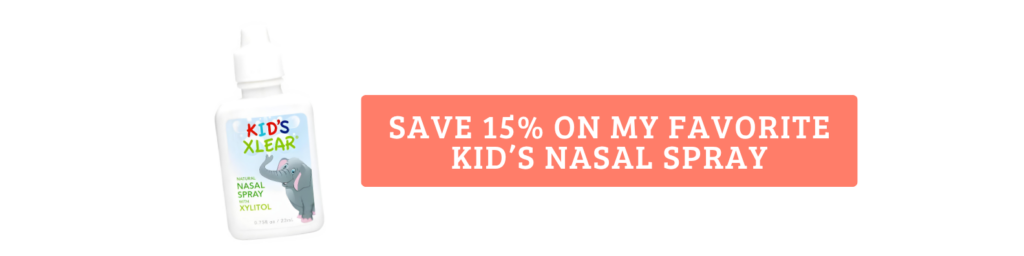
Best Nasal Spray Products for Kids
When choosing a saline nasal spray for kids, look for simple sterile saline without medication additives.
Some reliable options and why parents like them can be found in the chart.
For infants, saline drops may be easier than sprays.
Consistency matters far more than the brand.

Nasal Spray + What Else? My Complete Congestion Protocol
Saline spray is one of my first-line tools for congestion, but it works even better as part of a full support plan.
When my kids get sick, I combine:
- saline nasal spray
- humidifier use
- hydration and warm fluids
- immune-supportive nutrients
- extra rest
Inside the Doctor Mom Membership, I share my complete naturopathic cold and congestion protocols including:
- natural remedy dosing guides
- illness support plans
- immune strategies
- over 75 pediatric natural protocols
Having a plan before illness strikes can make sick days much less stressful for parents.

Common Questions About Saline Nasal Spray for Kids
IS SALINE NASAL SPRAY SAFE FOR BABIES?
Yes. Sterile saline drops are commonly used for infants to loosen mucus and improve breathing.
HOW OFTEN CAN YOU USE SALINE NASAL SPRAL ON KIDS?
Because it contains only saltwater, saline spray can be used multiple times daily during illness and once daily for prevention.
CAN NASAL SPRAY PREVENT EAR INFECTIONS?
Keeping nasal passages clear may help support healthy Eustachian tube drainage, which can reduce the risk of ear infections.
DOES SALINE SPRAY REALLY SHORTEN COLDS?
Research suggests nasal irrigation can reduce symptom severity and shorten illness duration by clearing mucus and viruses from the nasal passages.
CAN YOU USE TOO MUCH SALINE SPRAY?
Because saline is simply saltwater, overuse is unlikely to cause harm. However, excessive spraying (more than 6–8 times daily) may irritate nasal passages. Use as needed for symptom relief.
WHAT’S THE DIFFERENCE BETWEEN SALINE SPRAY & SALINE DROPS?
Drops are typically used for infants who can’t coordinate with spray mist. Sprays work better for toddlers and older children. Both contain the same sterile saline solution.
SHOULD I USE SALINE SPRAY BEFORE OR AFTER OTHER NASAL MEDICATIONS?
Use saline spray first to clear mucus, then wait 5–10 minutes before using any prescribed nasal medications. This helps the medication reach nasal tissues more effectively.
CAN I MAKE MY OWN SALINE SPRAY AT HOME?
While homemade saline solution is possible, commercial sterile saline products are inexpensive and ensure proper salt concentration and sterility. For safety and convenience, store-bought is typically recommended.
The Most Effective Tool For Childhood Respiratory Health
Saline nasal spray for kids may seem simple, but it’s one of the most effective tools for childhood respiratory health. It clears mucus, improves breathing, shortens illness, and may reduce ear infection risk.
The biggest barrier? Getting kids to cooperate. But with the right approach (routine, games, letting them try it on you first), most children adapt quickly.
Once it becomes part of your routine, saline spray often becomes the first tool you reach for every cold and flu season. And when paired with the right natural supports, it can dramatically improve how quickly kids recover.
Looking for More Resources? We've Got You Covered!