
Homeopathy for Kids: What Is It and Is It Safe?
You’re standing in your kitchen holding a tiny bottle of white pellets a friend swore by, and your toddler is sniffling on the couch behind you. You have no idea what’s in those pellets or whether they’re safe for a two-year-old, so you type “what is homeopathy for kids” into Google and brace yourself for twenty minutes of conflicting answers.
I get it, because I was a skeptic too. I grew up in a completely conventional family and never heard the word homeopathy until I sat in a lecture in naturopathic medical school. Sugar pellets that supposedly do something? I rolled my eyes so hard.
By my fourth year of training, I couldn’t get enough of it. I signed up for every homeopathy shift I could find, took extra electives, and flew across the country for more hands-on experience, because I kept watching patients with acute illness and deep chronic conditions actually get better. That skeptic-to-believer flip is exactly why I’m asking you to give homeopathy a real chance before you write it off.
- What Is Homeopathy for Kids? The One Rule It Runs On
- How Homeopathy Differs From Herbs, Supplements, and Vitamins
- Is Homeopathy Safe for Kids?
- Why the Wrong Homeopathic Remedy Won’t Hurt Your Child
- Why the Same Illness Needs a Different Remedy for Every Kid
- How Do You Give a Child Homeopathic Remedies?
- Where to Start With Homeopathy for Kids at Home
- FAQ: Homeopathy for Kids

Affiliate Disclaimer: Some of the links in this article are affiliate links, which means we may earn a commission if you make a purchase through those links at no additional cost to you. We only recommend products that we believe in and have personally used or thoroughly researched. Your support helps us continue to provide valuable content.
What Is Homeopathy for Kids? The One Rule It Runs On
Homeopathy runs on one rule: like cures like. The substance that causes a symptom, given in a safe, diluted form, is what treats that same symptom in your child.
The onion is the clearest example I have. Cut one and your eyes water and burn while your nose starts running. Homeopaths made a remedy from the onion itself, called Allium cepa, and it’s used for profuse, watery eyes and a runny nose, because that’s the exact reaction the onion causes in the first place.
I know the Latin names sound like a foreign language right now. Stick with me, because after you’ve used a few of these remedies, you’ll be saying them like an expert.
How Homeopathy Differs From Herbs, Supplements, and Vitamins
A lot of people lump anything natural under the word homeopathy, and that’s not accurate. Herbal tinctures, supplements, and vitamins each work in their own way. Homeopathy is its own medicine with its own philosophy, and nothing else in your natural medicine cabinet runs on like cures like.
Is Homeopathy Safe for Kids?
This is usually the real question underneath “what is homeopathy,” and it’s the reason homeopathy is the first natural medicine I put in every Doctor Mom’s hands, before herbs, supplements, or anything else.
In my clinical experience, homeopathy is safe at any age, from a newborn to your grandmother. It has no side effects, and you can give it alongside conventional medicine with no known interactions, whether your child is on antibiotics or you’ve already given Tylenol. That lines up with what the NIH’s National Center for Complementary and Integrative Health has found: highly diluted remedies, taken as directed, are generally safe and rarely cause serious adverse reactions.

Why the Wrong Homeopathic Remedy Won't Hurt Your Child
That safety profile changes the whole risk equation while you’re learning. Give the wrong remedy and nothing happens, so you simply move on to the next one. Give the right remedy and you tend to see fast improvement. That trade is a big part of why homeopathy is such a valuable addition to a Doctor Mom’s medicine cabinet.
If you’ve seen a scary headline about a specific remedy and wondered whether it applies to the bottle in your cabinet, you’re not alone. I broke down exactly what happened with the Belladonna teething controversy and what the evidence actually shows, so you can decide based on data instead of a headline.
Why the Same Illness Needs a Different Remedy for Every Kid
Almost every week in my practice, a mom would bring her kid in with a cough and ask, “What’s the homeopathic remedy for a cough?” As if one answer sat in a filing cabinet somewhere labeled COUGH. There isn’t one.
One kid has a wet, rattly cough that sounds like a coffee pot bubbling in his chest. Another has a dry, tickly cough that won’t let her sleep. A third coughs all day, but the second the sun goes down it gets so much worse it wakes the whole house. Then there’s the kid whose cough gets better the moment you hand him a popsicle or a cold glass of water.
Those four coughs each need a completely different remedy, and that’s homeopathy doing exactly what it’s designed to do: treating your specific kid instead of a diagnosis on a chart. I walk through this matching process in more detail in how to find the right remedy for your child’s exact symptoms.
How Do You Give a Child Homeopathic Remedies?
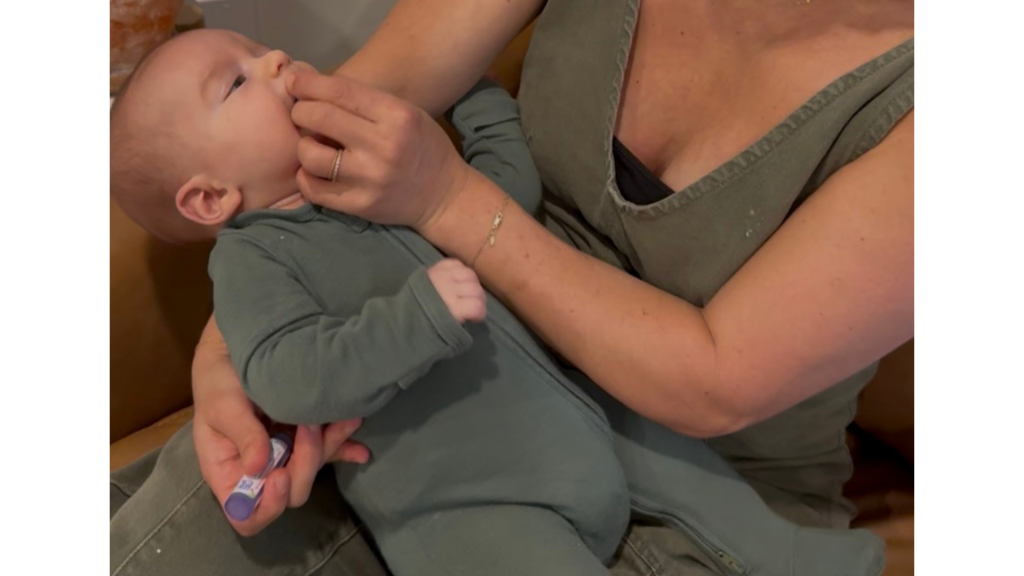
Most remedies come as tiny pellets. Place three to five directly in your child’s mouth and let them suck, chew, or swallow. Even if they spit it out, the medicine sits on the outside of the pellet, so a few seconds of contact is enough to work.
If pellets are an issue, dissolve them in one to two ounces of water and have your child sip. Each sip counts as a dose.
For anything acute, like a cough or a fever, give three doses fifteen minutes apart. If you’re not seeing improvement after that, it’s time to try a different remedy. This same dosing rhythm holds true well beyond childhood too. I use a similar approach when guiding moms through homeopathy during labor, just with different remedies matched to what’s happening in the moment.
One thing worth being clear on: this post is meant to help you understand how homeopathy works, not to diagnose or treat your child’s specific situation. Loop in your pediatrician or a provider trained in homeopathy about what’s right for your family.
Where to Start With Homeopathy for Kids at Home
If you want the exact remedies I keep on hand and how to use each one, my free Doctor Mom’s Medicine Kit Guide walks you through it. Read it on a quiet afternoon this week, so the next time a sniffle starts at 2am you’re reaching for a remedy you already understand instead of your phone.
FAQ: Homeopathy for Kids
What age can I start giving my child homeopathy?
Any age, including newborns.
Is homeopathy safe during pregnancy or while nursing?
Yes. It’s safe at any stage of life.
Can my child take homeopathy every day?
Yes. You can safely take it daily without harm.
How much should I give, and how do I actually give it?
Dosing is the same no matter your child’s age or weight, which is different from conventional medicine and many other natural medicines. Place three to five pellets directly in your child’s mouth and let them suck, chew, or swallow. Even if they spit it out, the medicine sits on the outside of the pellet, so a few seconds of contact is enough to work. If pellets are an issue, dissolve them in one to two ounces of water and have your child sip instead. Each sip counts as a dose.
What’s the difference between homeopathy and herbal remedies?
Homeopathy isn’t an herbal remedy, a supplement, or a vitamin. It’s its own medicine built on one rule, like cures like, and it works differently from how herbs or supplements work in the body.
Can I mix homeopathic remedies together?
It’s safe, but you’ll get better results giving one at a time. If you’re not sure which to start with, pick one and give it three doses, fifteen minutes apart. No improvement means you move to the next.
How long should I try a homeopathic remedy before switching?
For anything acute, give three doses fifteen minutes apart. If you’re not seeing improvement after that, switch to a different remedy.
Looking for More Resources? We've Got You Covered!
- Grab a Freebie here
- Learn about the Doctor Mom Membership
- Follow me on Instagram
