
Fiber for Kids: The Nutrient That Fixes Constipation, Boosts Immunity and Supports Mood
Your child hasn’t pooped in three days. You’ve tried prunes. You’ve pushed water. You’ve Googled “constipation in toddlers” at 11pm and come away more confused than when you started. Sound familiar?
Here’s what almost no one tells you: fiber for kids is the one nutrient that can both relieve constipation and prevent diarrhea. It works in both directions. And 97% of children in America aren’t getting enough of it.
That number comes straight from board-certified gastroenterologist Dr. Will Bulsiewicz, who joined Steph Greunke on the Doctor Mom Podcast to talk about the pediatric gut in a way that actually makes sense for moms. What they unpacked goes far beyond bathroom habits. Fiber shapes your child’s immune system, their mood, their skin, and their ability to focus. And getting more of it into their diet doesn’t require a dramatic overhaul, a food fight at the dinner table, or a new grocery budget.
It just requires knowing where to start.
I want to change that for you.
Affiliate Disclaimer: Some of the links in this article are affiliate links, which means we may earn a commission if you make a purchase through those links at no additional cost to you. We only recommend products that we believe in and have personally used or thoroughly researched. Your support helps us continue to provide valuable content.
What Fiber for Kids Actually Does in the Body
Most moms associate fiber with constipation relief. That’s true, but it’s a fraction of the picture.
When your child eats fiber-rich foods, the fermentable fiber travels to the large intestine where gut bacteria break it down and transform it into compounds called short-chain fatty acids. These are bioactive molecules that do a remarkable amount of work. They support the gut lining, feed beneficial bacteria, and regulate 70% of the immune system, which lives right there in the gut. They also travel through the bloodstream to impact the brain, skin, and every major organ system.
That’s why a child with a struggling gut doesn’t just have bathroom problems. She might also have frequent colds, eczema flares, mood swings, difficulty focusing, or skin breakouts as she gets older. The gut is not isolated from the rest of the body. It is connected to everything.
The other piece worth knowing: when your child eats a high-protein, low-fiber diet, the gut bacteria shift from fermenting fiber to fermenting protein. That’s when you get the foul-smelling gas. When fiber is present and the microbiome is well-fed, fermentation produces volume but not odor. Foul smell is a signal that the gut is out of balance, not just a funny kid thing.
Signs Your Child's Gut May Need More Fiber
Kids can’t always tell you what’s off. They know they don’t feel well, but connecting symptoms to a cause is hard for little ones. Here’s what to watch for:
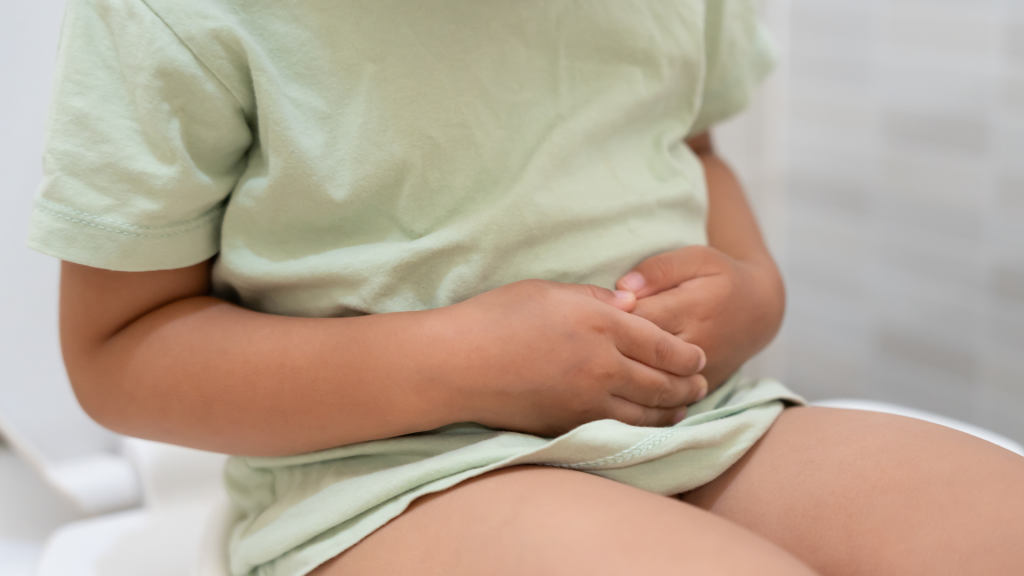
A bloated or protruding belly is actually the most common symptom of constipation in children, not skipping days. A child can have a bowel movement every single day and still be constipated if the stool is incomplete or the movements are difficult. Look for straining, small output, or a child who seems like they still need to go right after they went.
Overflow diarrhea is one that surprises a lot of moms. A child who is severely backed up can develop loose, foul-smelling stools as liquid sneaks past the blockage. It looks like diarrhea, but the actual problem is constipation. This is why fiber is so powerful: it’s the only thing that regulates in both directions. Laxatives push things one way. Fiber finds the middle.
Other signals worth noting include loss of appetite, low energy, nausea without vomiting, or a general “off” feeling your child can’t explain. These can all be gut-related. If your child also struggles with eczema, frequent illness, or mood instability, the gut is worth looking at more closely. For more on the eczema and gut-skin connection, see our post on detox baths for kids.
What About MiraLax? A Word on Common Recommendations
If your child has been prescribed MiraLax for constipation, you’re not alone. It’s one of the most common recommendations parents walk away with after a pediatric visit.
MiraLax can offer short-term relief, but it takes two to three days to reach full effect, which means dosing without guidance can lead to either no result or diarrhea. It also doesn’t address the root cause. Fiber does, because it feeds and rebuilds the gut microbiome over time rather than just pushing things through. We go deeper on MiraLax, what it does, and when it might be appropriate in our post on MiraLax safety for constipation in kids.
High Fiber Foods for Kids That Actually Work
The goal isn’t salads. It isn’t lectures at the dinner table. It’s finding the foods your child already enjoys and building from there.
FRUIT
Fruit is the easiest starting point, and it’s more powerful than most moms realize.
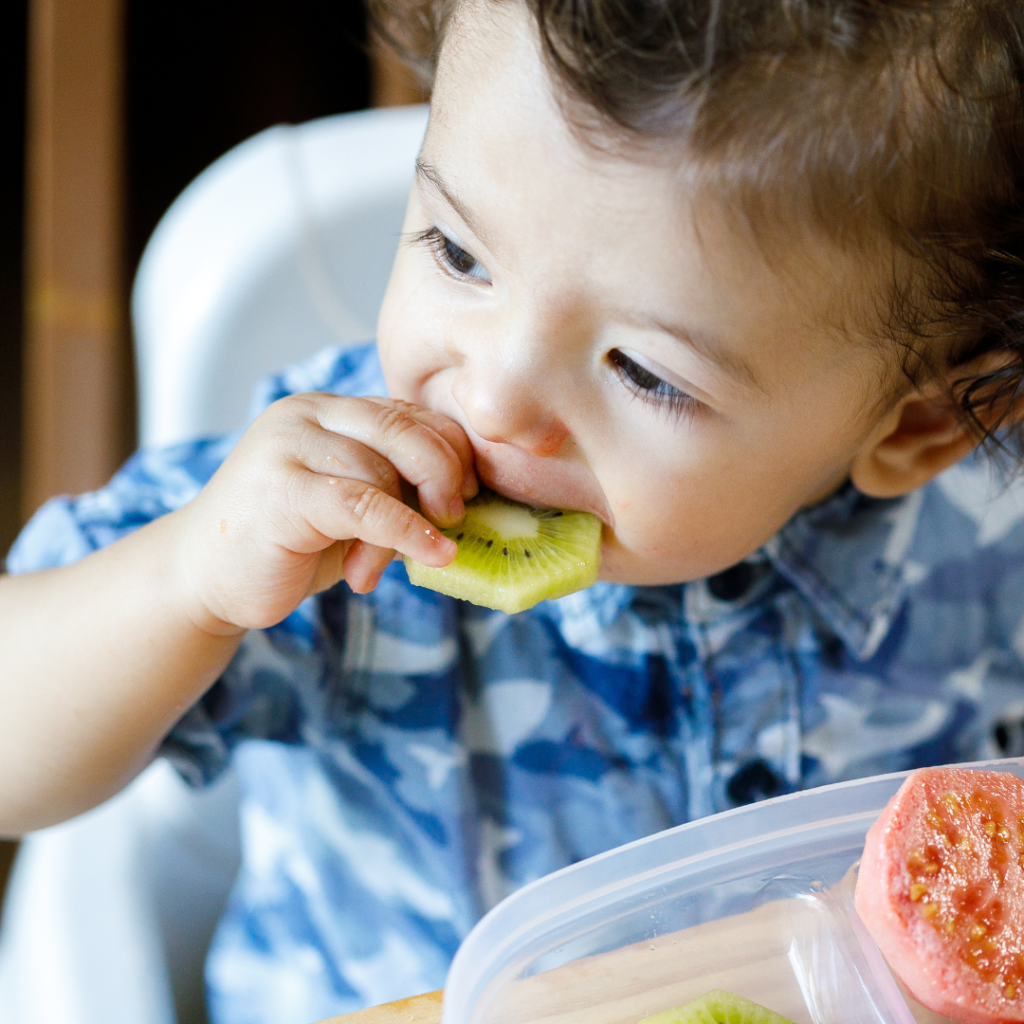
- Green kiwi has randomized controlled trial evidence showing it helps activate and move the bowels. It contains a specific type of fiber that draws water into the intestines, along with an enzyme called actinidin that supports digestion.
- Gold or red kiwi are sweeter options that still deliver fiber. If your child won’t eat green, go with the one they’ll actually eat.
- Raspberries and blackberries are surprisingly high in fiber, and most kids will eat an entire pint happily. Frozen berries work just as well and make a great snack straight from the freezer.
- Apples, pears, and prune juice are old standbys that hold up. Not glamorous, but they work.
SMOOTHIES
Smoothies are one of the most effective fiber delivery tools available to parents. The output just has to taste good. Once it does, you can quietly add:
- Chia seeds, flax seeds, or hemp seeds
- Frozen spinach or broccoli sprouts
- Frozen banana for thickness and natural sweetness
Frozen bananas also become the base for healthy “nice cream,” a thick, custard-like frozen treat that requires nothing more than blending. Pour the smoothie into silicone molds, freeze, and serve as pops. Your child thinks it’s a treat. You know it’s a fiber delivery system.
SAUCES
Sauces are underrated vehicles for hidden fiber. A good tomato sauce can quietly absorb:
- Lentils or white beans
- Cauliflower or blended zucchini
- Any soft vegetable that blends smooth
For texture-sensitive children, blend the sauce after adding vegetables so it’s completely smooth. Serve over pasta and the kids are none the wiser.

HUMMUS AND DIPS
Hummus deserves more credit than it gets. Nutritionally, it’s almost identical to eating chickpeas. If your child will dip carrots, pretzels, or pita in hummus, they’re getting meaningful fiber and plant-based protein. The dipper doesn’t have to be perfect for the hummus to count.
GROUND MEAT DISHES
Tacos, taco salads, and ground meat bowls are easy places to fold in extra fiber without a fight. Try adding:
- Cauliflower rice
- Black beans or lentils
- Any finely diced soft vegetable
The seasoning does the heavy lifting and the additions disappear into the dish.
How to Increase Fiber for Kids Without Making It a Battle
The number one mistake is going too fast. Adding a lot of fiber all at once causes bloating, cramping, and gas, which makes the whole experiment feel like a failure. It’s not. It’s just too much too soon.
Start with one meal. Look at what your child already eats and ask: where could a fruit, a vegetable, or a legume fit without a fight? Breakfast smoothies, after-school snack swaps, and sauce-based dinners are the three easiest entry points.
Model it yourself. Children watch their parents more than they listen to them. If you’re eating the same foods, the resistance usually softens over time.
Let them participate. Kids who help make the smoothie, pick the hummus flavor at the store, or stir the sauce are more likely to eat what results from it.
And don’t make it the goal to get to a specific number. Just improve what’s already there. One small addition, repeated consistently, does more than a dramatic overhaul that lasts a week.
Why Fiber Affects More Than Digestion
This is the part that tends to surprise moms.
The short-chain fatty acids produced when fiber is fermented don’t stay in the gut. They travel through the bloodstream and reach the skin, the brain, and every major organ system. Research has shown they cross the blood-brain barrier and reduce neuroinflammation, which is now understood to be a significant driver of many mood disorders.
That means a child who is irritable, unfocused, or struggling with mood regulation may be showing you a gut that needs support. The same is true for a child whose eczema keeps flaring, who catches every bug that comes through school, or whose energy is inconsistent. These are whole-body symptoms with a gut-health component that fiber directly addresses.
A note worth making here: this is educational information, not a substitute for working with your child’s provider. If your child is dealing with chronic symptoms, ongoing gut evaluation with a practitioner you trust is always the right next step.
Inside the Doctor Mom Membership, there’s a Constipation Protocol that walks you through the full root-cause approach, including dietary strategies, supplement support, and clear guidance on when to seek further care. It’s the step-by-step plan for the moments when fruit and smoothies aren’t enough.
Fiber for Kids FAQ
How much fiber does a child actually need per day?
A common guideline is to take your child’s age and add five. So a four-year-old would aim for around nine grams per day. Most children in America are getting far less. The priority isn’t hitting an exact number daily, it’s consistently offering fiber-rich foods at meals and snacks so intake builds naturally over time.
What are the easiest high fiber foods to start with for picky eaters?
Fruit is the most universally accepted starting point. Kiwi, apples, pears, raspberries, and blackberries are all strong choices. Smoothies are the second most effective tool because the ingredients are hidden inside a good-tasting drink. From there, hummus with any dipper and sauces with hidden vegetables are reliable next steps for resistant eaters.
Can too much fiber cause problems for kids?
Yes, if you increase too quickly. Adding a lot of fiber at once causes gas, bloating, and cramping, which can put both you and your child off the whole idea. Increase slowly, a little more each week, and give the gut time to adapt. This is especially important for children who have been eating a low-fiber diet.
Is fiber the same as probiotics? Do kids need both?
They work together but are different things. Fiber is a prebiotic, meaning it’s the food that beneficial gut bacteria eat. Probiotics are the bacteria themselves. Both matter, but fiber is foundational because without it, the good bacteria have nothing to feed on. If you’re choosing where to start, increasing fiber-rich foods comes first.
What does it mean if my child’s gas smells really bad?
Odorless gas typically signals fermentation of fiber, which is actually healthy gut activity. Foul-smelling gas often indicates the gut bacteria are fermenting protein instead of fiber, which usually points to too little fiber in the diet or a gut microbiome that needs support. Consistently bad-smelling gas, especially paired with other symptoms, is worth a conversation with your child’s provider.
When should I be concerned about my child’s bowel habits?
Talk to your child’s provider if constipation is chronic and not responding to dietary changes, if you suspect overflow diarrhea, if your child is in pain around bowel movements, or if symptoms are accompanied by blood in the stool, unexplained weight loss, or significant abdominal pain. Root-cause evaluation with a practitioner who takes an integrative approach can make a real difference.
Looking for More Resources? We've Got You Covered!
- Grab a Freebie here
- Learn about the Doctor Mom Membership
- Follow me on Instagram
