Are X-Rays Safe for Children? What Parents Need to Know About Medical Imaging
The doctor recommends an X-ray. Your stomach drops. Is this safe? What about the radiation?
That knot you feel? Every parent has it. Medical decisions feel heavy when you don’t have the full picture.
Here’s the reassuring truth: most pediatric imaging uses very small radiation doses and is considered very safe when medically necessary. Understanding when imaging helps and how to support your child afterward replaces fear with confidence.
- Understanding Radiation Exposure from Medical Imaging
- How Much Radiation Do X-Rays and CT Scans Actually Deliver?
- Are X-Rays Safe? What the Science Shows
- When to Ask Questions About Imaging (and What to Ask)
- How to Support Your Child’s Body After Radiation Exposure
- The Bottom Line: Be Informed, Not Fearful
- FAQ

Affiliate Disclaimer: Some of the links in this article are affiliate links, which means we may earn a commission if you make a purchase through those links at no additional cost to you. We only recommend products that we believe in and have personally used or thoroughly researched. Your support helps us continue to provide valuable content.
Understanding Radiation Exposure from Medical Imaging
Medical imaging tools like X-rays and CT scans work by using ionizing radiation, which passes through the body to create images of bones, tissues, and organs. These images help doctors quickly identify injuries, infections, or internal problems that can’t be seen from the outside.
An X-ray produces a single image, similar to a photograph of the inside of the body. A CT scan (computed tomography) takes many X-ray images from different angles and combines them into detailed cross-sectional images. Because CT scans gather much more information, they also use a higher radiation dose.
This is why CT scans are typically reserved for situations where doctors need very detailed information right away.
Common reasons children may need imaging include:
- Confirming a broken bone
- Diagnosing pneumonia or lung infections
- Locating swallowed objects
- Evaluating head injuries
- Looking for appendicitis or internal bleeding
- Identifying serious infections or abscesses
- Clarifying complex fractures when standard X-rays aren’t enough
Sometimes imaging involves contrast dye, which helps certain tissues and blood vessels show up more clearly on the scan. Contrast is often given through an IV, though it may occasionally be taken orally.
If contrast is recommended, it usually means doctors need a clearer map of what’s happening inside the body, not necessarily that something more serious is suspected. A brief warm sensation can occur when contrast is administered, and allergic reactions are uncommon but possible. Medical teams are trained to monitor children carefully and take precautions if there are concerns like dehydration or kidney issues.
Understanding the purpose of the imaging often helps parents feel more at ease. In many situations, these tests provide information that allows doctors to treat a child quickly and effectively.

How Much Radiation Do X-Rays and CT Scans Actually Deliver?
One of the most reassuring things for parents to learn is that radiation exposure from most medical imaging is relatively small.
Radiation is measured in millisieverts (mSv), but those numbers can be difficult to interpret without context. Every person is exposed to small amounts of radiation naturally through sunlight, soil, and even certain foods. This is known as background radiation.
Comparing medical imaging doses to everyday background exposure helps put things into perspective.
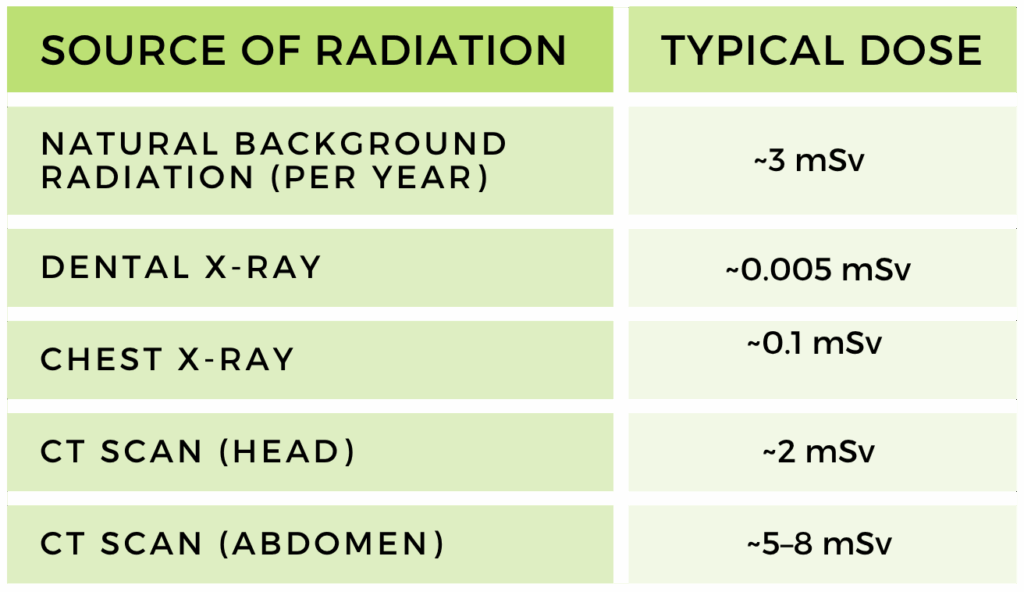
A typical chest X-ray delivers about the same radiation you would receive naturally from the environment over roughly ten days.
CT scans use higher doses, but they also provide significantly more diagnostic information. When used appropriately, the benefits of getting an accurate diagnosis usually outweigh the potential risks.
In many cases, imaging helps doctors quickly identify problems that could otherwise worsen if left untreated.
Are X-Rays Safe? What the Science Shows
Parents often want a clear answer to the question: Are X-rays safe for children?
The scientific consensus is yes, when used appropriately, X-rays are considered very safe. The radiation dose from a single pediatric X-ray is extremely small, and large studies have shown that the risk from a single medically necessary scan is very low.
Modern imaging technology has also improved dramatically. Digital X-ray systems use significantly less radiation than older film-based machines, and pediatric hospitals adjust equipment settings specifically for children’s bodies.
Another important safety measure used in radiology is the ALARA principle, which stands for As Low As Reasonably Achievable. This guiding principle means healthcare providers aim to:
- Order imaging only when it is truly necessary
- Use the lowest radiation dose that still produces a clear image
- Avoid repeated imaging whenever possible
- Use pediatric protocols designed specifically for children
In other words, doctors are always trying to gather the information they need while minimizing radiation exposure.
It’s also helpful for parents to know that higher radiation exposures tend to come from repeated CT scans or specialized imaging like fluoroscopy, not from a typical one-time X-ray for a suspected fracture or infection.
When imaging is recommended, it’s usually because not having the information would be riskier than the radiation itself.
When to Ask Questions About Imaging (and What to Ask)
Even though imaging is generally safe, informed parents can still play an important role in their child’s care. Asking thoughtful questions helps you understand the reasoning behind a recommendation and ensures you feel comfortable with the plan.
If your child needs imaging, consider asking:
- What are you trying to rule out?
- Will the results change treatment today?
- Are pediatric dose-reduction protocols being used?
- Could ultrasound or MRI be used instead?
- Is contrast necessary for this scan?
These questions help clarify the medical purpose of the test. For example, CT scans are often recommended when doctors need to quickly evaluate serious concerns like head injuries, internal bleeding, or appendicitis, situations where rapid answers can significantly affect treatment decisions.
Once parents understand the “why” behind a test, it often becomes much easier to advocate for any potential changes to the plan and stay calm and supportive for their child.
How to Support Your Child’s Body After Radiation Exposure
Even though radiation doses from imaging are small, many parents still want to be proactive and support their child’s body afterward.
The goal is supporting the body’s natural repair and antioxidant systems.
A few simple strategies can help.
EMPATHIZE ANTIOXIDANT-RICH FOODS
Radiation exposure can create small amounts of oxidative stress in the body. Antioxidant-rich foods help neutralize free radicals and support cellular repair.
Foods that naturally support these processes include:
- Blueberries, raspberries, blackberries, and cranberries
- Kale, broccoli, tomatoes, and squash
- Black beans and other legumes
- Pecans and other nuts
- Cilantro and fresh herbs
- Spices like ginger, cinnamon, clove, and turmeric
Including a variety of colorful fruits and vegetables in the days following imaging can help provide nutrients that support the body’s natural recovery processes.

ENCOURAGE HYDRATION
Hydration is particularly important if your child received contrast dye during a CT scan. Fluids help the kidneys efficiently clear the contrast agent from the body.
Encourage water, broths, herbal teas, or water-rich fruits like watermelon and oranges.
THERAPEUTIC BATHS
Warm baths containing Epsom salts or bentonite clay are another gentle strategy many families use after medical procedures. These baths may support relaxation, circulation, and natural elimination pathways.
Just as importantly, baths help signal to the nervous system that the stressful experience is over.
GROUNDING AND OTHER OUTDOOR TIME
Spending time outside can also support recovery. Grounding is direct contact with the earth such as walking barefoot on grass and has been studied for its potential to reduce inflammation and oxidative stress.
After a medical appointment, fresh air, sunlight, and gentle play can help children regulate their nervous systems and return to a sense of normalcy.
SUPPORTING EMOTIONAL RECOVERY
For many kids, the most stressful part of imaging isn’t the radiation, it’s the experience itself. Machines can be loud, the room unfamiliar, and the process a little strange.
Helping your child’s nervous system settle afterward can make a big difference. Simple strategies include:
- Offering a favorite snack or warm drink
- Wrapping them in a cozy blanket
- Holding hands and breathing slowly together
- Going outside for fresh air and movement
- Returning to play once the appointment is over
A reassuring phrase like “All done. Your body is safe.” can help signal closure to your child’s nervous system.
Sometimes the biggest medicine after a medical test is simply helping your child feel calm, safe, and connected again.

The Bottom Line: Be Informed, Not Fearful
The radiation doses in modern pediatric imaging are small, and safety principles like ALARA ensure doctors minimize exposure.
When imaging is recommended, understand why it’s needed, ask thoughtful questions, and support your child’s body afterward. That’s how you walk into these moments with the calm, steady confidence your child needs most
FAQs About X-rays, CT Scans, and more
How much radiation is in an X-ray?
A typical chest X-ray exposes a child to about 0.1 millisieverts of radiation, which is roughly equivalent to the amount of natural background radiation a person receives over about ten days.
Are dental X-rays safer than medical X-rays?
Dental X-rays typically use very small radiation doses, often even lower than a chest X-ray. Modern digital dental imaging systems are designed to minimize exposure while still producing clear images.
Are CT scans safe for children?
CT scans use more radiation than standard X-rays, but they are considered safe when medically necessary. Doctors typically recommend CT scans only when detailed imaging is required to diagnose or treat a potentially serious condition.
What foods help after radiation exposure?
Foods rich in antioxidants such as berries, leafy greens, cruciferous vegetables, beans, nuts, and spices like turmeric and ginger can support the body’s natural repair processes.
Should parents support detox from X-ray radiation?
The body has natural detox systems through the liver, kidneys, and immune system. Supporting these systems with hydration, nutrient-dense foods, rest, and stress recovery is generally beneficial. If you are looking for more ways to support your child with targeted supplements, the Doctor Mom Membership has a protocol to specifically support your child after imaging.
Looking for More Resources? We've Got You Covered!