Are Sippy Cups Bad? Understanding Impact on Jaw, Speech and Development
If you’re a parent of a baby or toddler, you’ve almost certainly been told to introduce a sippy cup at some point. They’re everywhere! Baby registries, daycare lists, pediatrician handouts, and the shelves of every baby store all feature sippy cups.
But many parents are starting to ask a different question:
Are sippy cups bad for development?
It’s a great question, and one more parents are asking as we learn more about oral motor development, speech, and facial growth in children.
The good news? This isn’t about guilt or doing things perfectly. Like many parenting tools, sippy cups are popular because they solve a real problem, but there may be better options for supporting your child’s development.
Let’s look at the science, the concerns, and what many feeding specialists (and myself as a naturopathic doctor!) often recommend instead.

Affiliate Disclaimer: Some of the links in this article are affiliate links, which means we may earn a commission if you make a purchase through those links at no additional cost to you. We only recommend products that we believe in and have personally used or thoroughly researched. Your support helps us continue to provide valuable content.
- Why Sippy Cups Are So Popular (and Why That Makes Sense)
- The Problem with Traditional Sippy Cups: Impact on Development
- How Sippy Cups Affect Jaw and Facial Development
- Sippy Cups and Speech: What Parents Should Know
- What We Use Instead: Better Alternatives for Toddlers
- Sippy Cup vs. Straw Cup vs. Open Cup for Development
Why Sippy Cups Are So Popular (and Why That Makes Sense)
Before we talk about the concerns, it’s important to acknowledge why sippy cups became so popular in the first place.
For parents of young toddlers, they offer some very appealing benefits:
- Less mess than open cups
- Spill-proof lids
- Easy for toddlers to hold
- Portable for outings
- Familiar transition from bottles
For busy parents juggling meals, snacks, and toddlers on the move, sippy cups feel like a practical middle ground between bottles and regular cups.
And for decades, they’ve been recommended as the standard next step once babies transition off bottles around 12 months.
But in recent years, speech therapists, feeding therapists, dentists, and pediatric specialists have started raising concerns about how traditional sippy cups may affect oral development.

The Problem with Traditional Sippy Cups: Impact on Development
Most traditional sippy cups have a hard spout that sticks out from the lid, requiring children to tilt the cup and suck liquid through the spout.
The problem is that this mimics the sucking pattern used with bottles, rather than encouraging the mature drinking patterns we want children to develop. Extended use may contribute to forward tongue posture and immature swallowing mechanics, which can influence oral motor development and dental alignment over time.
Several developmental concerns have been raised about long-term sippy cup use, including potential impacts on:
- Jaw development
- Facial muscle development
- Tongue movement
- Oral motor skills
- Speech development
- Dental alignment
None of this means a single use of a sippy cup will cause harm. The concern arises when children rely on them for years instead of transitioning to more developmentally supportive drinking methods.
Harm doesn’t happen with occasional use, the concern is with prolonged dependence.
How Sippy Cups Affect Jaw and Facial Development
One of the biggest concerns specialists discuss is how traditional spouted cups influence oral posture and facial growth.
When children drink from a typical sippy cup, they often:
- Push the tongue forward
- Maintain a sucking pattern similar to bottle feeding
- Use fewer facial muscles than needed for mature swallowing
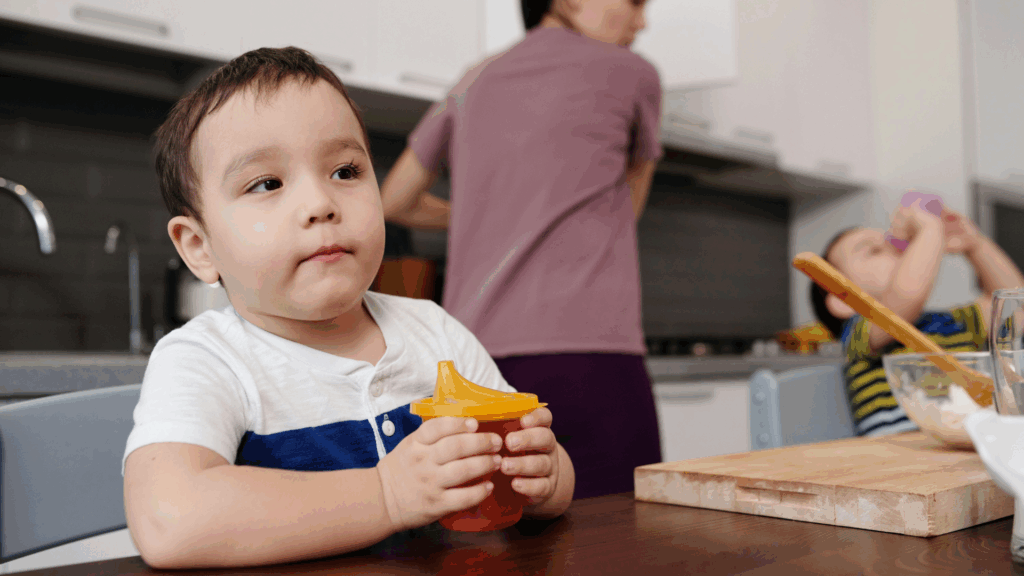
Over time, this pattern may encourage what feeding specialists call “tongue thrust”, where the tongue pushes forward instead of resting against the roof of the mouth.
Why does this matter?
The position of the tongue plays a surprisingly important role in guiding jaw and facial development. Proper tongue posture helps support:
- Healthy palate formation
- Balanced facial growth
- Proper swallowing mechanics
- Dental alignment
When children continue using sucking patterns longer than necessary, it may interfere with the development of these more mature motor patterns.
Again, this is typically a long-term pattern concern, not something that happens overnight.
Sippy Cups and Speech: What Parents Should Know
Another area of discussion is speech development.
Speech requires a coordinated set of movements involving the:
- Tongue
- Lips
- Jaw
- Soft palate
- Facial muscles
When toddlers rely heavily on spouted cups, they may continue using sucking patterns rather than the tongue and lip coordination needed for speech sounds.
Speech-language pathologists often emphasize that the same oral muscles used for drinking and eating are the muscles children later use for speaking clearly.
This is one reason many speech therapists encourage earlier transitions to straw cups or open cups, which require more natural tongue and lip movement.
It’s important to note that sippy cups alone do not cause speech delays, but minimizing prolonged use may help support more natural oral motor development.
What We Use Instead: Better Alternatives for Toddlers
The good news is that there are excellent alternatives that support development while still being practical for parents.
Two of the most recommended options are:
STRAW CUPS
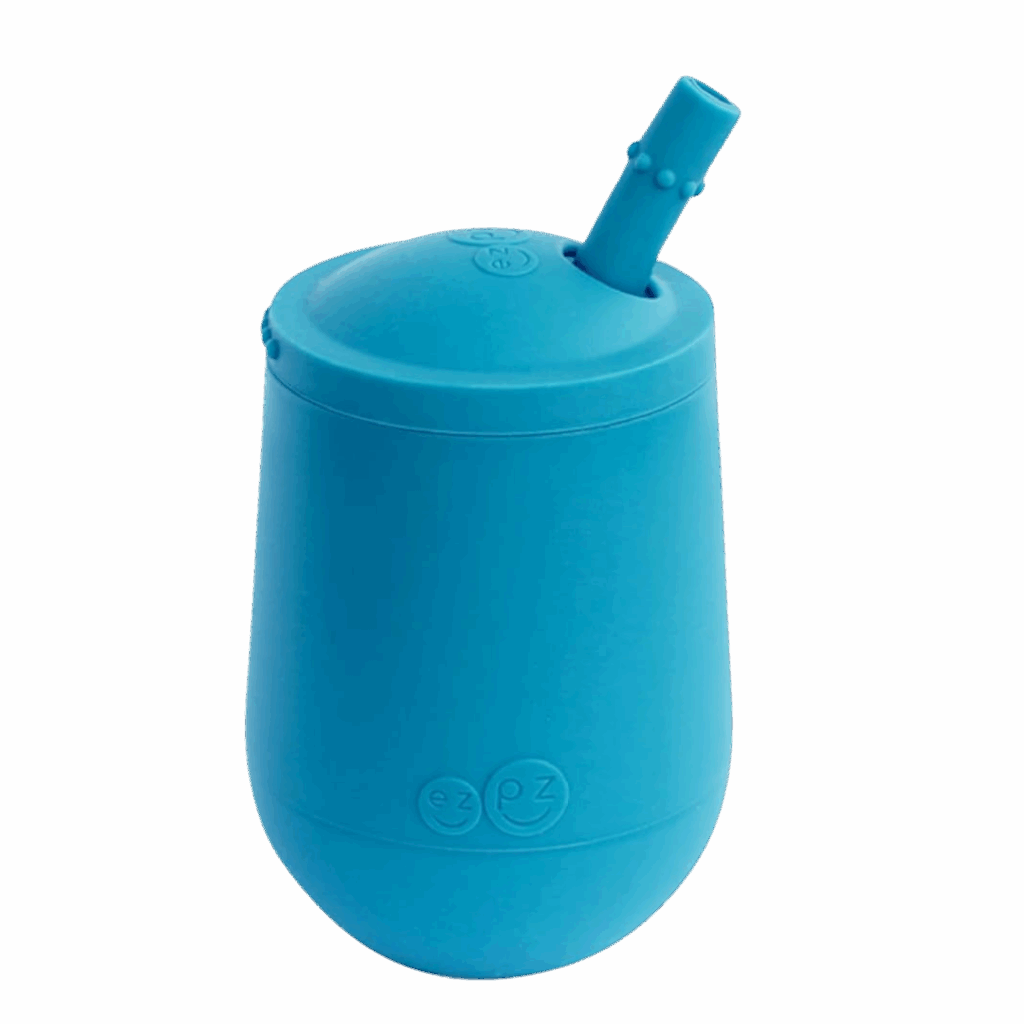
Straw drinking encourages:
- Proper tongue retraction
- Lip closure
- Jaw stability
- Coordinated swallowing
These movements are much closer to the mature drinking pattern children will use for the rest of their lives.
Many feeding therapists now recommend introducing straw cups as early as 6–9 months once babies begin drinking small amounts of water.
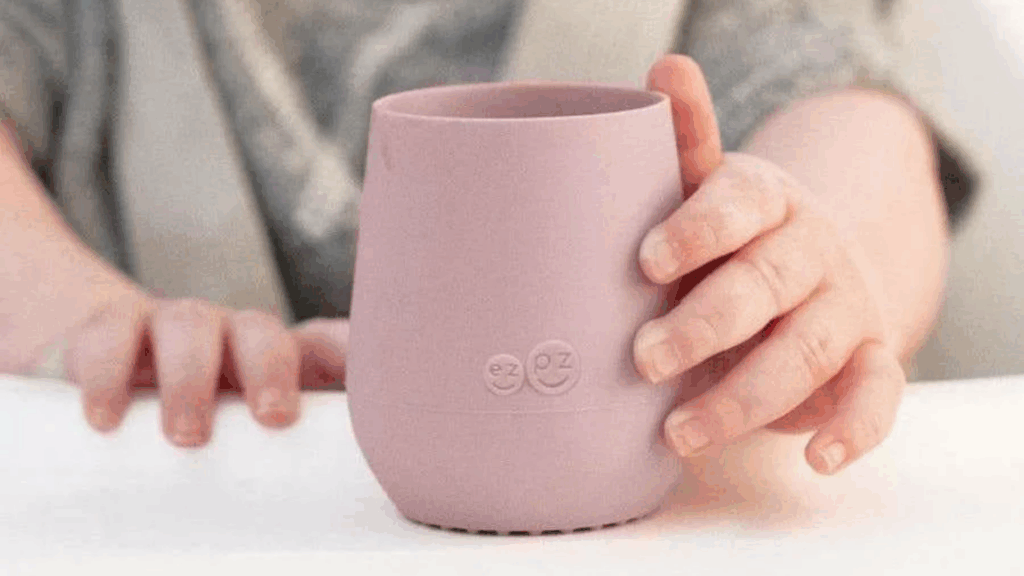
OPEN CUPS
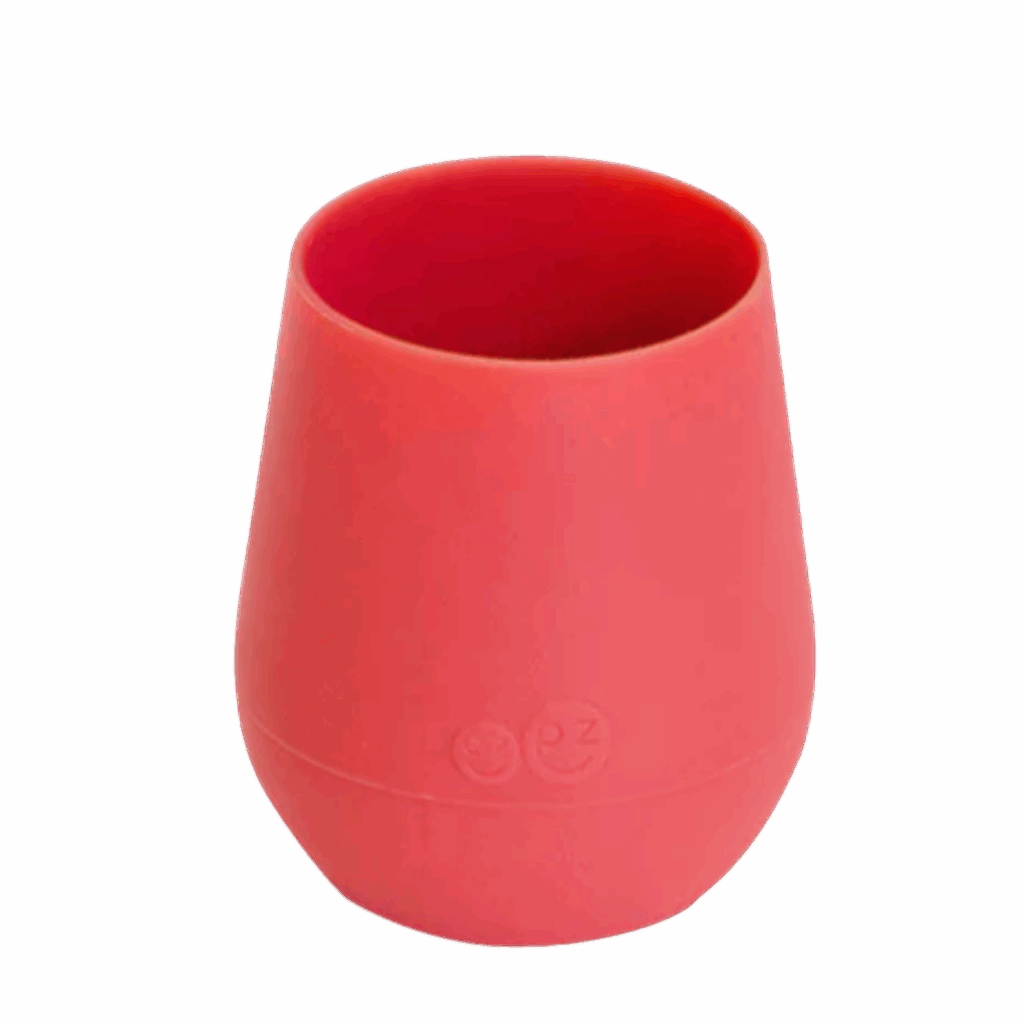
Open cups support:
- Natural lip control
- Controlled swallowing
- Oral motor coordination
They also help toddlers learn body awareness and pacing while drinking.
Of course, open cups come with one obvious challenge:
Spills.
But with practice (and small cups with tiny amounts of liquid), most toddlers become surprisingly skilled quite quickly.
Sippy Cup vs. Straw Cup vs. Open Cup for Development

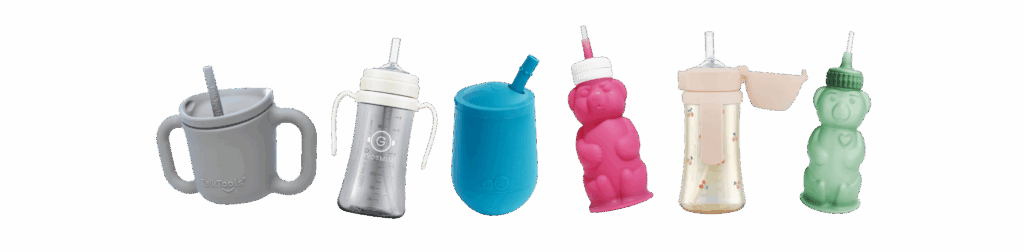
The Best Straw Cups for Toddlers
If you’re looking for sippy cup alternatives, these straw cups are often parent favorites:
- TalkTools Silicone Training Cup
Helps babies learn straw drinking without all the plastic. - HoneyBear Silicone Straw Cup
Allows toddlers to drink from any angle. - EZPZ Mini Cup + Straw System
Designed with developmental feeding principles in mind. - Grosmimi Straw Cup
A durable option with a spill-resistant design.
When choosing a straw cup, look for:
- Soft silicone straws
- Spill-resistant lids
- Simple designs that are easy to clean
I also love this one from Target!
Teaching Your Toddler to Use an Open Cup: Timeline and Tips
Many parents are surprised to learn that babies can begin practicing open cup drinking around 6 months.
The key is to start small and treat it as a learning experience rather than expecting perfection.
PRACTICAL TIPS
Start with:
- Very small cups
- Only 1–2 ounces of liquid
- Holding the cup together with your baby
You can also practice during mealtimes when spills are less stressful.
As toddlers gain coordination, they usually become much more confident drinkers.
Many families find that by 18–24 months, their child can comfortably drink from an open cup with minimal help.
What I Do with My Own Kids: A Real-Life Approach
In our own home, we skipped traditional spouted sippy cups entirely.
Instead, we introduced:
- Open cup practice at meals starting around 6 months
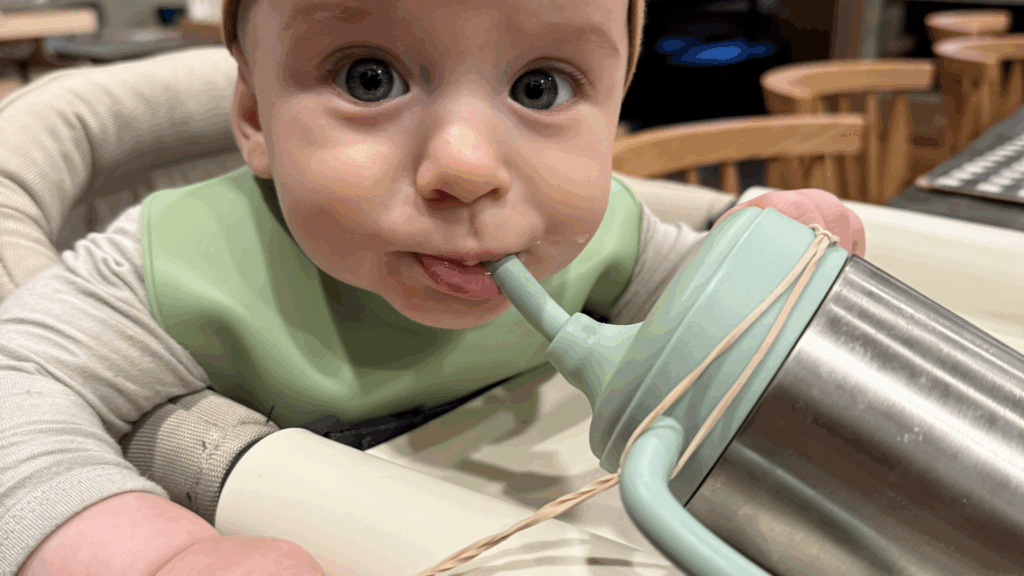
- Straw cups for water throughout the day
Was it messy at first? Absolutely.
But toddlers learn quickly, and within a few weeks the spills became minimal.
What I liked most about this approach is that it supports natural development without requiring a complicated transition later.
Many parents find that when children never become dependent on sippy cups, there’s no struggle to take them away later.
When a Sippy Cup Might Be Okay
Like many parenting tools, this doesn’t have to be all-or-nothing.
There are situations where a sippy-style cup may be practical:
- Travel days
- Car rides
- Occasional daycare use
- Situations where spills would be difficult
If you do choose to use a spill-proof cup occasionally, the type matters:
Better options even within ‘sippy-style’ cups:
- 360-degree cups (like Munchkin Miracle Cup) that require lip seal rather than sucking
- Cups with soft silicone spouts rather than hard plastic
- Weighted straw cups that function like straw cups but are spill-resistant
Types to avoid for prolonged use:
- Traditional hard-spout sippy cups
- Cups that require strong sucking action
- Cups used all day as a pacifier replacement
Think of sippy cups as a convenience tool rather than a developmental staple.
So, Are Sippy Cups bad?
Not inherently, but traditional spouted sippy cups may not be the most supportive choice for oral motor development when used long term.
More pediatric specialists are now encouraging parents to move toward:
- Straw cups
- Open cups
- Earlier transitions away from bottle-style sucking patterns
The goal isn’t perfection! It’s simply supporting the natural development of your child’s mouth, jaw, and speech muscles.
And the good news is that toddlers are incredibly adaptable. With a little practice, most children quickly learn to drink from cups that support healthier development.
FAQ About Sippy Cups
AT WHAT AGE SHOULD A BABY STOP USING A SIPPY CUP?
Many experts recommend transitioning away from traditional spouted sippy cups by 12–18 months if possible, and using straw or open cups instead.
DO SIPPY CUPS DELAY SPEECH?
Sippy cups alone don’t cause speech delays, but prolonged use may encourage sucking patterns rather than the tongue and lip movements needed for speech development.
WHAT IS THE BEST FIRST CUP FOR A BABY?
Many feeding therapists recommend straw cups or small open cups as the first cups for babies learning to drink.
ARE STRAW CUPS BETTER THAN SIPPY CUPS?
In most cases, yes. Straw cups encourage more mature oral motor patterns and better tongue coordination.
CAN MY TODDLER SKIP SIPPY CUPS COMPLETELY?
Absolutely. Many families transition directly from bottles to straw cups and open cups, avoiding sippy cups entirely.
Looking for More Resources? We've Got You Covered!