Is Chlorine Bad for Kids? How to Protect Children from Pool Chemicals Naturally
Summer and swimming go hand in hand for most families. Pool parties, swim lessons, backyard sprinklers, and lake days are some of childhood’s best memories. But if you’re a Doctor Mom who tries to minimize chemical exposures, you’ve probably wondered at some point: is chlorine bad for kids?
It’s a fair question. Chlorine is a chemical added to pools specifically to kill bacteria. But that same disinfecting power can also irritate skin, eyes, lungs, and even the microbiome.
The good news? You don’t have to choose between protecting your child’s health and letting them enjoy the pool.
With a few simple strategies before, during, and after swimming, you can significantly reduce chlorine exposure while still letting your kids splash, play, and make those classic summer memories. You can have your summer swim cake and eat it too!

Affiliate Disclaimer: Some of the links in this article are affiliate links, which means we may earn a commission if you make a purchase through those links at no additional cost to you. We only recommend products that we believe in and have personally used or thoroughly researched. Your support helps us continue to provide valuable content.
Understanding Chlorine Exposure: Should Parents Be Concerned?
Short answer: yes, it’s reasonable to be aware of chlorine exposure. BUT it’s also manageable.
Chlorine is widely used in pools because it kills harmful pathogens like E. coli, salmonella, and parasites that can spread in shared water. Without it, public pools would pose a much higher risk of infectious disease.
However, chlorine doesn’t just stay floating harmlessly in the water. It reacts with sweat, urine, skin cells, and other organic material in the pool to create compounds called chloramines.
These chloramines are responsible for:
- The strong “chlorine pool smell”
- Eye irritation
- Skin dryness
- Respiratory irritation in sensitive individuals
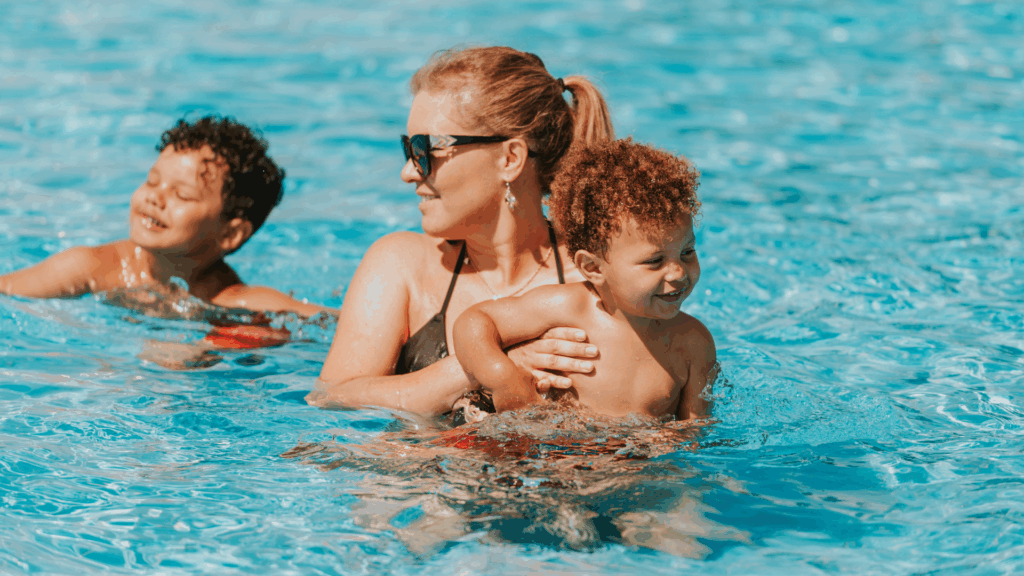
Children may be more vulnerable to chlorine exposure than adults for a few reasons:
- Their skin barrier is thinner
- They breathe faster and inhale more air relative to body size
- Their immune and detoxification systems are still developing
Research has linked heavy chlorine exposure, especially in indoor pools with poor ventilation, to increased respiratory irritation and asthma symptoms in some children.
But it’s important to keep perspective.
For most kids, occasional swimming in properly maintained pools is not dangerous. You don’t need to eliminate swimming, simply reduce unnecessary exposure.
How Chlorine Affects Children’s Growing Bodies

Again, the key takeaway isn’t panic. Be prepared and confident with simple protection strategies.
Before the Pool: Simple Protection Strategies
A little preparation before swimming can go a long way in reducing chlorine absorption.
APPLY A NATURAL SKIN BARRIER
One of my favorite tricks is applying a thin layer of coconut oil to my kids’ skin before they swim.
Why it works:
- Coconut oil acts as a physical barrier on the skin
- It helps prevent chlorine from stripping natural oils
- It reduces dryness and irritation afterward
You only need a light layer, not enough to make the pool greasy, just enough to coat the skin.
CHOOSE SALTWATER POOLS WHEN POSSIBLE
Saltwater pools still contain chlorine, but the chlorine is generated more gradually through a salt chlorinator system.
Many families find saltwater pools feel gentler on:
- Skin
- Eyes
- Hair
If you have the option between traditional chlorine and saltwater pools, saltwater is often the more comfortable choice.
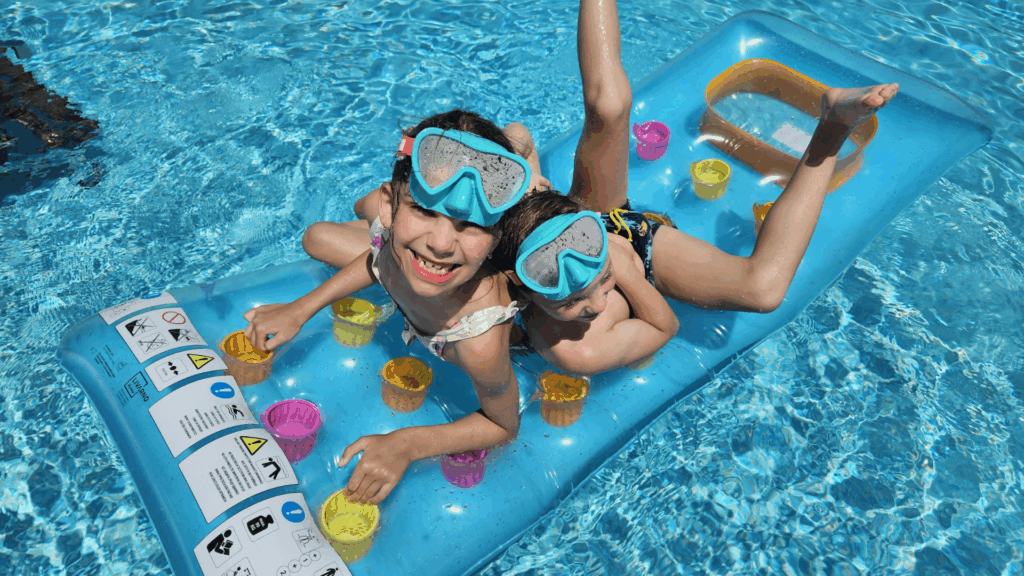
USE SWIM GOGGLES
Goggles are a simple but powerful way to protect children’s eyes from irritation.
They help prevent:
- Red eyes
- Burning sensations
- Repeated chlorine exposure to the eyes
Many kids also love goggles because they make underwater play more fun.

During Swimming: Smart Habits to Reduce Exposure
Once your child is in the pool, a few simple habits can help minimize chlorine exposure.
ENCOURAGE KIDS NOT TO SWALLOW POOL WATER
This one sounds obvious, but it’s worth repeating.
Young children often swallow pool water accidentally while playing. Encourage them to:
- Close their mouths underwater
- Spit out water if it gets in their mouth
Even small reductions in swallowed pool water can help protect gut health.
TAKE BREAKS DURING LONG SWIM SESSIONS
If your kids are swimming for hours at a time during swim lessons or summer camps, encourage occasional breaks.
This helps reduce:
- Skin exposure
- Respiratory exposure
- Accidental ingestion of water
FAVOR OUTDOOR POOLS
Outdoor pools allow chloramine gases to disperse more easily into the air.
Indoor pools, particularly poorly ventilated ones, tend to have higher concentrations of chloramine vapors near the water surface.
When possible, outdoor pools are the better choice.
After the Pool: How to Remove Chlorine Naturally
What you do after swimming can make a big difference in minimizing chlorine’s effects.
RINSE OFF IMMEDIATELY
The most important step is showering or rinsing your child as soon as possible after swimming.
This removes chlorine residue before it can continue irritating the skin.
Even a quick rinse with clean water is helpful if a full shower isn’t available.
USE A VITAMIN C SPRAY FOR CHLORINE
This is one of my favorite lesser-known tricks.
Vitamin C neutralizes chlorine and a simple spray after pool use can minimize the aggravations chlorine can cause.
There are many products available on the market, but you can make a simple DIY version by dissolving vitamin C powder (ascorbic acid or sodium ascorbate) in water and storing it in a spray bottle.
What you need:
- 4 oz dark glass spray bottle
- 1/2 tsp powdered vitamin C (sodium ascorbate)
- 1/2 cup filtered water
How to make it:
- Combine, shake, and it’s ready to use!
- Spray your kids’ body and hair before AND after the pool (after rinsing off first if you can). This works great for adults too!
One thing to remember: make a fresh batch each week. Vitamin C breaks down fast, so it won’t last longer than that.
Benefits may include:
- Neutralizing chlorine on the skin
- Reducing irritation
- Supporting skin recovery
HYDRATE WELL
Swimming in the sun can be surprisingly dehydrating!
Encourage kids to drink plenty of water after swimming to help support:
- Detoxification pathways
- Skin hydration
- Overall recovery
Adding electrolytes can also be helpful during long pool days.

What I Do with My Own Kids: A Real-Life Approach
As a doctor and a mom, I try to balance reducing exposures without creating fear around normal childhood activities.
My kids absolutely swim in pools.
But we follow a few consistent habits:
DOCTOR MOM CHLORINE PROTECTION CHECKLIST
☀️ BEFORE SWIMMING
- Apply a light layer of coconut oil to protect skin
- Pack swim goggles in the swim bag
💦 DURING SWIMMING
- Remind kids not to swallow pool water
- Encourage breaks during long swim sessions
🚿 AFTER SWIMMING
- Rinse or shower as soon as possibl
- Use a vitamin C spray for chlorine if available
- Encourage plenty of water for hydration
These small steps take just a few minutes but make a noticeable difference in preventing dry skin, irritated eyes, and that lingering chlorine smell.
Most importantly, they allow my kids to fully enjoy summer.
The Bottom Line: Let Them Swim (with a Few Extra Protections)
Is chlorine bad for kids? It can irritate skin, eyes, and lungs, and children may be more sensitive than adults. But pools don’t need to be off limits.
Reduce exposure with protective habits: coconut oil before swimming, goggles during, and vitamin C spray plus immediate rinsing after. These simple steps let children enjoy carefree summer swimming while minimizing chlorine’s effects.
FAQs About Pool Chemicals
DOES VITAMIN C REMOVE CHLORINE?
Yes. Vitamin C (ascorbic acid or sodium ascorbate) chemically neutralizes chlorine. A simple vitamin C spray applied to the skin after swimming can help reduce chlorine residue and irritation.
IS CHLORINE IN POOLS BAD FOR SKIN?
Chlorine can strip natural oils from the skin, which may lead to dryness, itching, and eczema flares in some children. Rinsing after swimming and using protective barriers like coconut oil can help reduce these effects.
SHOULD KIDS SHOWER AFTER SWIMMING?
Yes. Showering or rinsing after swimming helps remove chlorine and other pool chemicals from the skin and hair, reducing irritation and dryness.
ARE SALTWATER POOLS BETTER FOR KIDS?
Saltwater pools still contain chlorine but often feel gentler on skin and eyes because chlorine levels are typically lower and more stable.
HOW CAN I PROTECT MY CHILD FROM CHLORINE?
You can reduce chlorine exposure by applying coconut oil before swimming, using goggles, encouraging kids not to swallow pool water, rinsing after swimming, and using a vitamin C spray to neutralize chlorine on the skin.
Looking for More Resources? We've Got You Covered!